
- SmartphoneOn Wi-Fi or mobile data
- Feature phoneNo data plan
- Basic phone2G signal only
01
Reach
Works on every handset, including feature phones, with no internet connection.

No app, no data plan, no download. SMS reaches virtually every mobile phone in use, which is why it's still the backbone of alerts, OTPs, and mass campaigns. Messangi gives you direct carrier connectivity in the markets where it operates directly, coverage across LATAM and the Caribbean, and three ways to send: the Communications Console, a REST API, or SMPP.
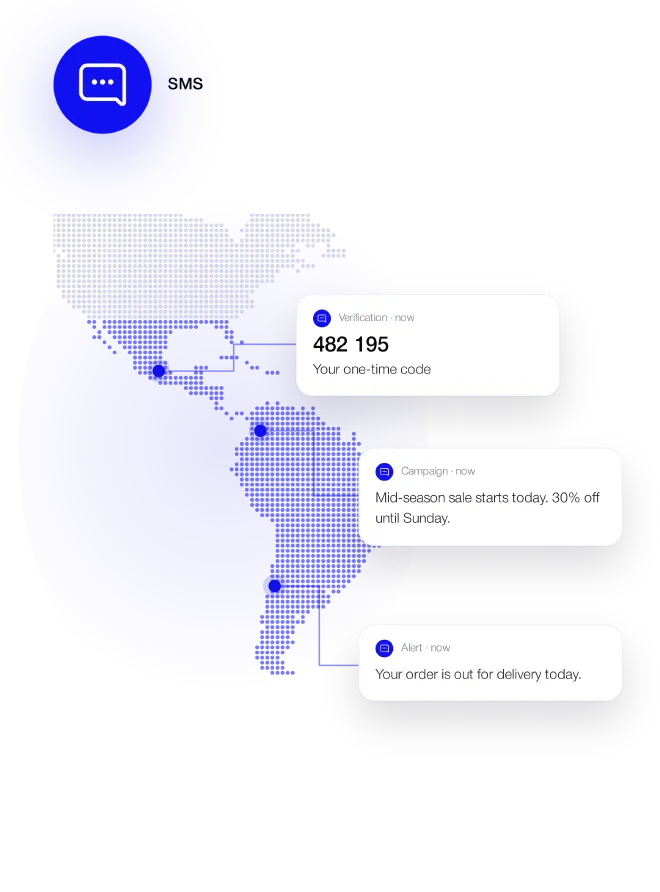
Works on every handset, including feature phones, with no internet connection.
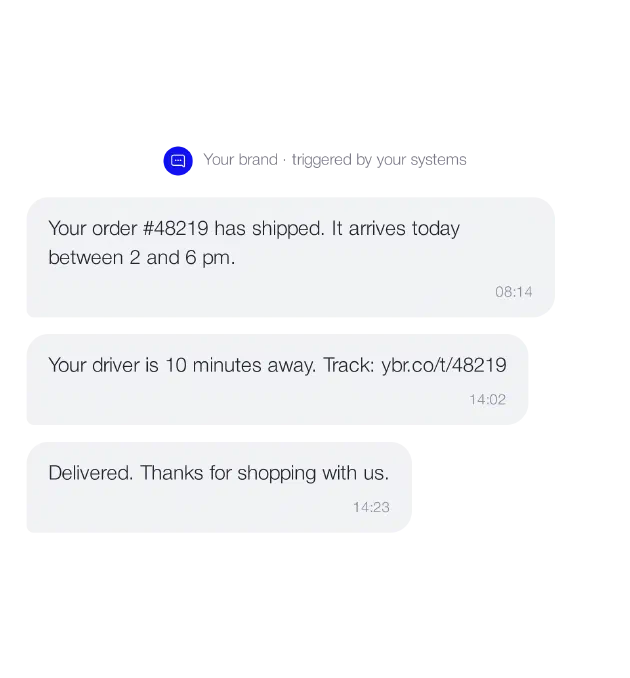
The default channel for time-critical alerts and one-time passwords.
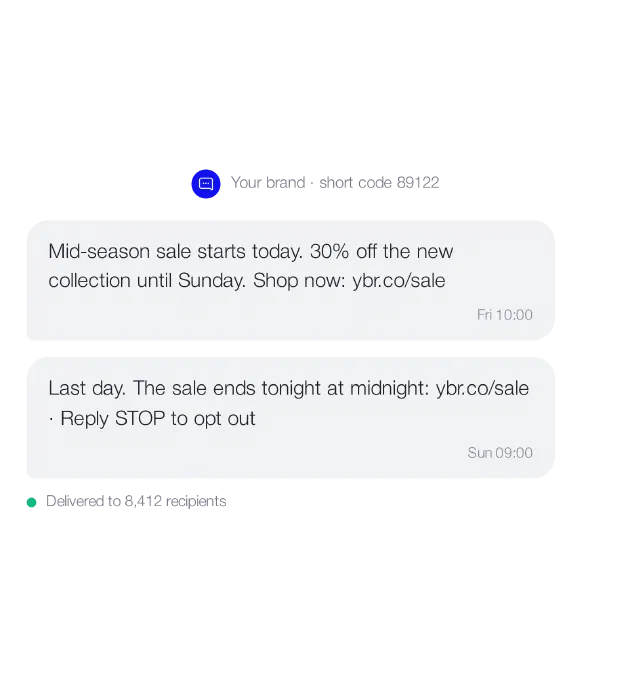
Mid-season sale starts today. 30% off the new collection until Sunday. Shop now: ybr.co/sale
160 characters force clarity; no design, no spam folder.
Bulk and segmented sends from Broadcast — no code needed.
REST API and SMPP gateway to send and receive SMS from your own software, with delivery callbacks and full logs — documented, and with an engineer from our team alongside yours during integration.
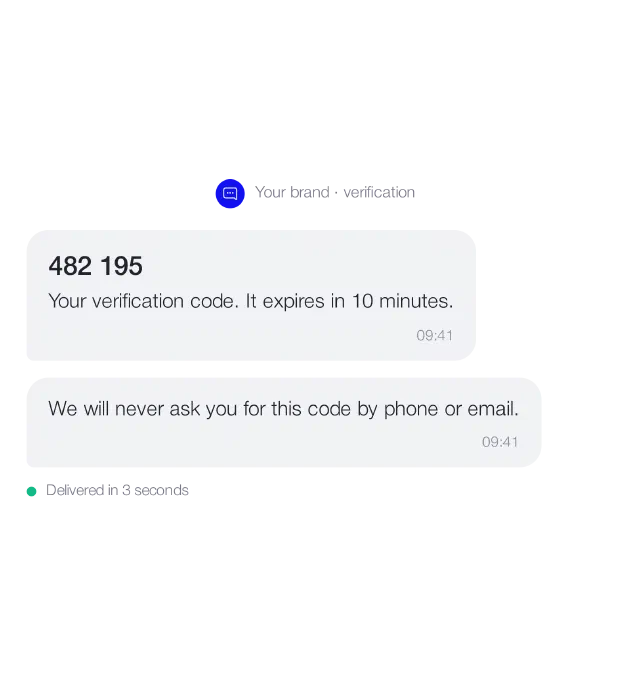
Verify users at signup, login, and transaction time with unique codes, delivered over routes configured for time-sensitive traffic.
Two-way messaging and keyword-triggered Automations
Automated responses and Consent Management, with opt-outs applied across channels
Support for any character set (GSM-7 / UCS-2)
Direct carrier connectivity where Messangi operates directly; coverage across LATAM and the Caribbean
Short codes and sender IDs, requested through each market’s regulator or registration process
Brand, sender, and campaign registration handled for you in the markets that require it
In the United States: registered Campaign Service Provider with The Campaign Registry for 10DLC, numbers held under Messangi’s own NNID, and Tier 2 aggregation for short codes and toll-free
SMS in the United StatesRoutes, sender registration, and licensing change from country to country. See where Messangi operates directly with carrier connectivity, where it works through established local partners, and what each market requires before your first send.
SMS rarely stays alone for long. It's the channel that reaches the part of your audience WhatsApp and RCS don't, the one that still carries the OTP when a data connection drops, and the one that works on a handset bought a decade ago. On Messangi it runs beside WhatsApp, RCS, and email on the same platform — shared contacts, shared consent, one report — so adding a second channel later is a configuration change rather than another vendor and another contract.
Compare the four channels