
Verified sender identity
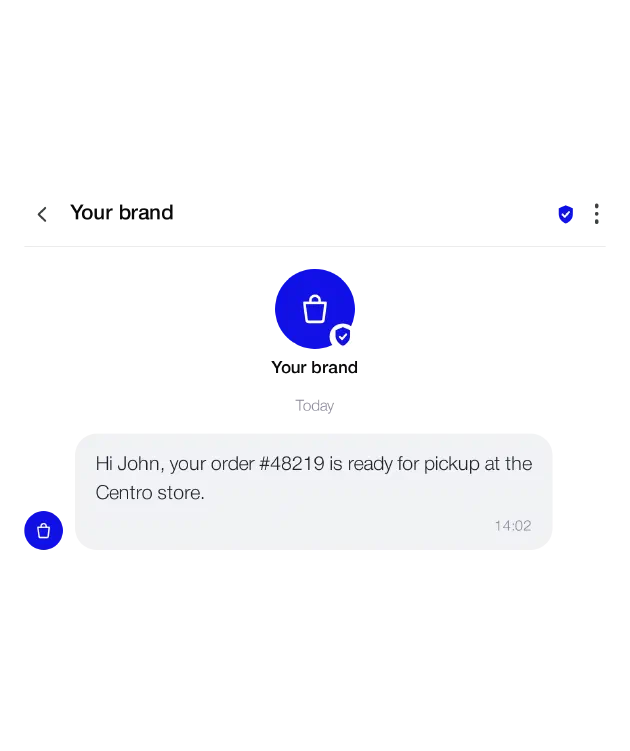
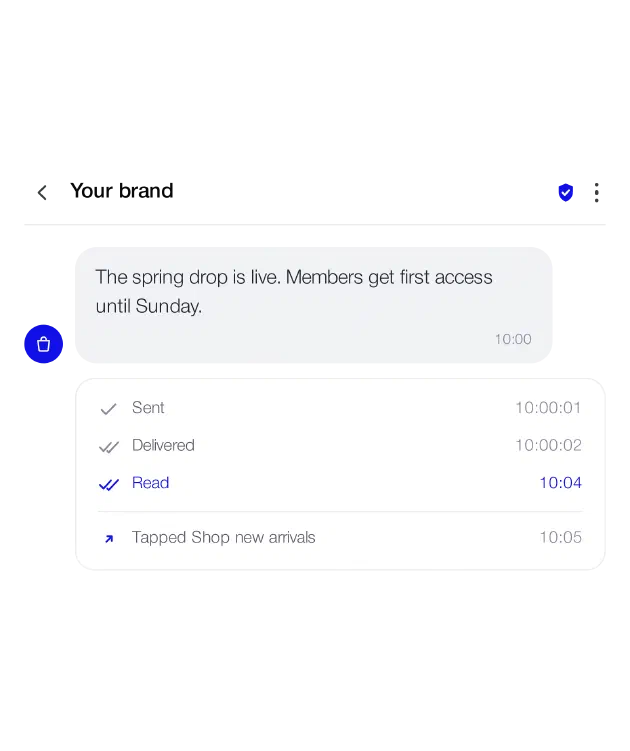
Your business name, logo, and verification badge replace a numeric sender — customers can see it’s really you, which matters in a market where smishing is routine.

RCS upgrades the phone’s default messaging app with branded, verified sender profiles, images, carousels, and tappable replies — with no app for the customer to install. The channel has moved from promise to platform: Google reported more than a billion monthly active users with RCS enabled in Google Messages (Google, November 2023), and in May 2026 Apple and Google began rolling out end-to-end encrypted RCS in beta with the GSMA.
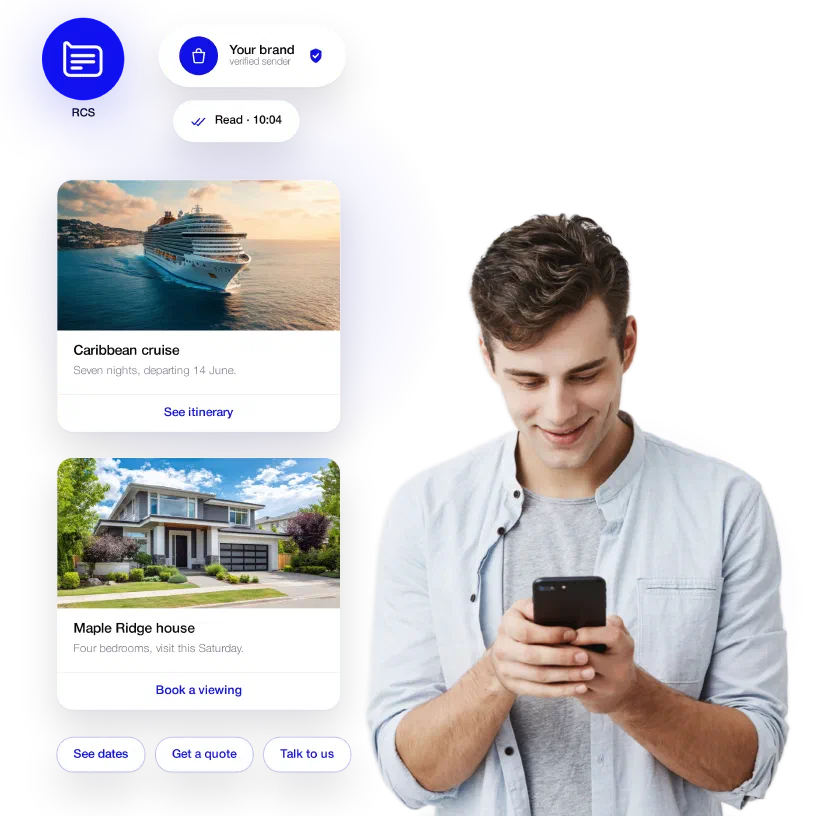
Your business name, logo, and verification badge replace a numeric sender — customers can see it’s really you, which matters in a market where smishing is routine.
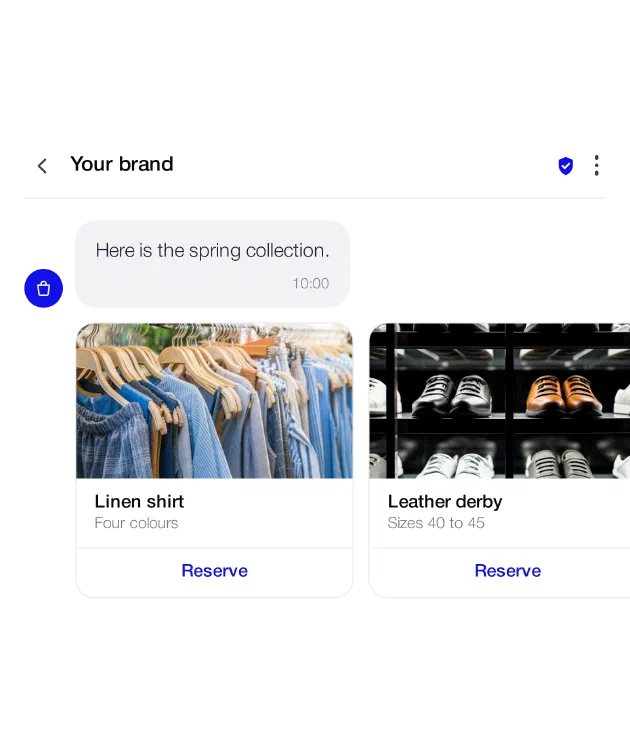
High-resolution images, video, and product carousels inside the native messaging app — no link-outs required.
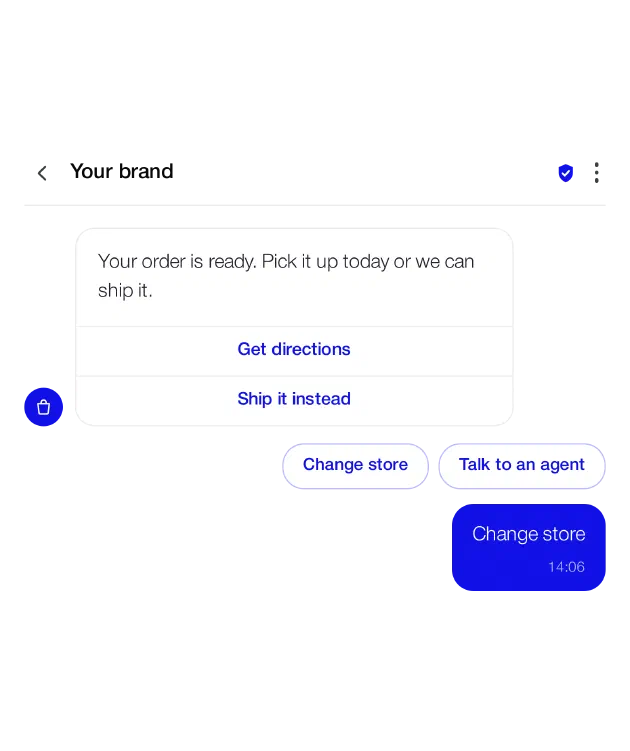
Suggested replies and action buttons: open a map, add to calendar, call, or buy — one tap from the conversation.
Delivery, read, and interaction metrics that SMS can’t provide.
Carrier and device support for RCS still varies from market to market, which is the honest answer to “can we use it yet”. You don’t have to wait for the answer to be yes everywhere: run RCS where it’s supported and SMS everywhere else — same audience, same templates, same reporting, no second stack and no second contact list. Tell us where you send and we’ll confirm what’s live today.
See where Messangi operatesYes. Apple added RCS support with iOS 18, and in May 2026 Apple and Google began rolling out end-to-end encrypted RCS in beta on iOS 26.5 with supported carriers. That encryption rollout covers person-to-person messaging; business traffic follows the RCS Business Messaging rules. The practical consequence for a campaign is that RCS stopped being an Android-only consideration — which is what changed the case for building on it.